


Page 13 - sulwhasoo-2019-070809
P. 13
| 설화지혜 |


 몸과 마음을 다듬는 향기로운 정화


 The Fragrant Purification to Refine the Body and Mind


 시원한 물에 몸을 식히거나, 이열치열로 땀을 내는 목욕은 여름을 견디게 하는 좋은 방안이다.
 더구나 예부터 전해지는 목욕법에는 여러 병증을 없애고 고운 피부를 지킨 지혜가 가득하다.
 글 민소연 사진 이종근 스타일리스트 문지윤(뷰로 드 끌로디아) 어시스턴트 황남주, 장세희


 지금 우리에게는 목욕이 일상의 중요한 하나가 되었다. 하루를 시작하거나 마무리할 때, 몸을 단정
 하고 깨끗하게 하는 것은 당연한 일과다. 하지만 과거 선인들에게 목욕은 단순히 위생을 위한 ‘세신
 洗身’보다는 ‘목욕재계沐浴齋戒’와 같은 종교적 의미가 깊었다. 불교적 가치가 드높았던 삼국시대
 부터 고려시대까지 목욕은 수행과도 같았다. 세속의 더러움을 털어내고 정신을 맑게 다듬듯 몸도
 깨끗하게 유지하고자 했다. 특히 고려인이 목욕을 수시로 즐겼다는 것은 유명하다. 더운 여름이면
 하루에 두 번씩은 남녀노소 가리지 않고 시냇가에서 목욕을 했다고 전하며, 왕실에서는 향유를 사
 용해 더욱 화려한 목욕 문화를 즐겼다.
 한편 성리학이 국가 이념이었던 조선시대의 목욕은 ‘예법’과 ‘치료’의 목적으로 행해졌다. 나신을 보
 이는 것도 예법에 어긋난다 하여 목욕 전용 가운을 입고 부분적으로 씻었으며, 전신욕은 연례행사와
 도 같았다. 음력 3월 3일인 삼짇날, 5월 5일 단옷날, 6월 15일 유둣날 등 날씨가 풀린 봄에서 여름 사
 이에 주로 목욕을 했는데, 특히 단옷날에는 창포를 삶은 물로 머리를 감고 물가에서 물맞이를 했다.


 Bathing is a significant part of our everyday life. It is a daily routine to cleanse our body at the
 start and end of the day. Furthermore, bathing was more of a religious observance for the an-
 cestors than personal hygiene. It was a part of their daily discipline when Buddhism was strictly
 pursued, from the Age of the Three Empires to the Goryeo Dynasty. They sought to maintain
 the cleanliness of the body just as they cleared the mind of worldly filth. It is well known that
 the people of Goryeo have enjoyed bathing every now and then. They enjoyed bathing by the
 stream twice a day on hot summer days, and the royal families used aromatic oils for a more
 glamorous bathing.
 Bathing during the Joseon Dynasty, which was built upon the principles of a rather rigid Con-
 fucianism, was performed for ‘ceremonial’ and ‘treatment’ purposes. They believed that it was
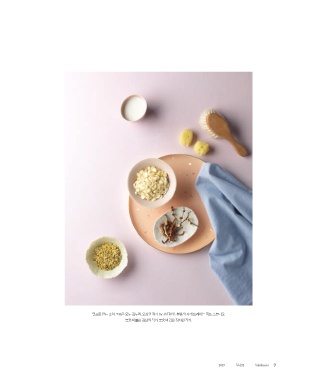
                                       펄프로 만든 종이 그릇은 모두 김누리, 오상원 작가 by JAERYO. 분홍색 자개 트레이는 픽트 스튜디오.
 not proper to show their naked bodies, so they wore bathing gowns to partially wash themselves.   분홍색 볼은 김남희 작가. 분홍색 컵은 정지원 작가.
 Full-body bathing was a yearly event. People enjoyed bathing mostly between the late spring and
 summer on Samjitnal (March 3), Dano (May 5), or Yudutnal (June 15) of the lunar calendar. On
 Dano, in particular, they used Acorus calamus water to wash their hair and body.


 8                                                                                         2019                      Vol.92                     Sulwhasoo    9

